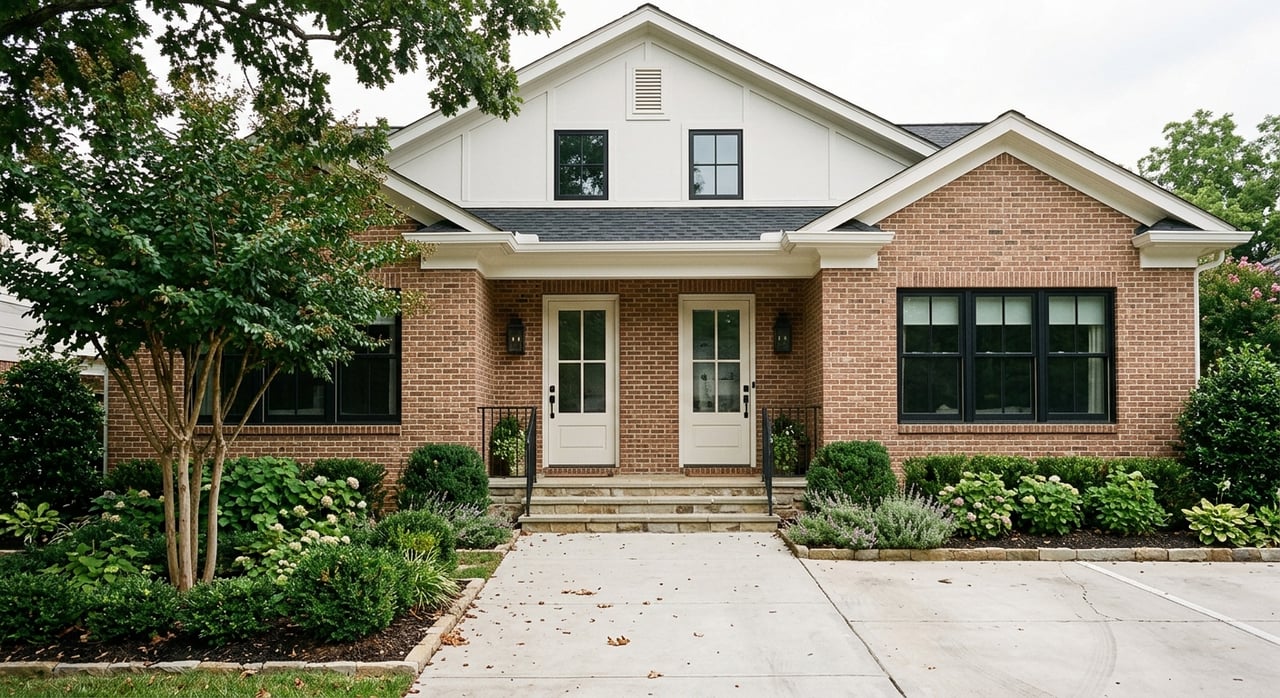
If you are looking at rental property in Southwest Atlanta, one number will not tell the whole story. A home that looks promising on a listing sheet can underperform once you factor in taxes, vacancy, repairs, and financing. The good news is that with the right underwriting, you can spot where the stronger opportunities may be and avoid deals that only look good on the surface. Let’s dive in.
Why SW Atlanta Needs ZIP-Level Analysis
Southwest Atlanta and the Westside are not one uniform rental market. Returns can change meaningfully from one ZIP code to the next, which is why it helps to underwrite each property based on its exact location instead of using a broad area average.
Recent ZIP-level data show median home prices of $339,949 in 30310, $275,000 in 30311, $299,949 in 30314, $370,000 in 30318, and $286,990 in 30331. Median rents in those same ZIPs are $1,677, $1,825, $1,797, $1,924, and $1,734, respectively, according to local market data from Realtor.com. Based on those figures, gross rent yields land at roughly 5.9% to 8.0% before expenses.
That range matters. A property in one ZIP may look more affordable to buy, while another may support stronger rent levels. If you blend the whole area together, you can miss the difference between a thin deal and a workable one.
Home Values Vary by Neighborhood
Neighborhood-level pricing tells a similar story. Zillow home value data shows approximate values around $285,240 in West End, $250,037 in Oakland City, $284,760 in West View, and $244,768 in Adams Park.
Several of those neighborhoods were also down about 10% to 16% year over year in the source data. For you as an investor, that can cut two ways. Softer values may create better entry points, but they also make it even more important to avoid overpaying based on older pricing assumptions.
Demand Still Supports the Rental Story
While pricing has shifted in some pockets, regional demand remains supportive. The Atlanta Regional Commission reported that the 11-county Atlanta region added 64,400 residents in the past year, and Fulton County added 18,800.
At the same time, Marcus & Millichap noted in its 1Q 2026 multifamily report that Southwest Atlanta has a limited construction slate. In plain terms, population growth and a modest new supply pipeline can help support rental demand over time.
Start With Rent Benchmarks
Before you estimate returns, it helps to establish a realistic rent range. Current market medians are useful, but they should not be the only input in your analysis.
HUD’s FY2026 Small Area Fair Market Rent schedule provides solid baseline benchmarks for common unit types in key Westside ZIPs:
- 30310: 1BR $1,300 | 2BR $1,440 | 3BR $1,730
- 30311: 1BR $1,250 | 2BR $1,370 | 3BR $1,640
- 30314: 1BR $1,170 | 2BR $1,280 | 3BR $1,530
- 30318: 1BR $1,870 | 2BR $2,050 | 3BR $2,460
- 30331: 1BR $1,460 | 2BR $1,600 | 3BR $1,920
These numbers can help you stress-test a deal. If a property only works at a best-case rent target but falls apart closer to HUD benchmarks, that is a sign to be cautious.
Property Taxes Can Change the Math Fast
In SW Atlanta, taxes are one of the biggest factors that can separate a decent deal from a weak one. Georgia assesses real property at 40% of fair market value, and the Georgia Department of Revenue explains that one mill equals $1 per $1,000 of assessed value.
Using the current figures in the research, a property inside the City of Atlanta and Atlanta Public Schools may face about 40.7 mills before any special district levy, which works out to roughly 1.63% of market value before exemptions. The City also lists a 2.0-mill special service district levy for BeltLine and Atlanta Stitch areas.
That is why one of the first underwriting questions should be simple: What is the exact tax jurisdiction for this parcel? A small location difference can materially change your annual costs.
Core Expense Assumptions to Use
No two properties will have exactly the same operating profile, but the sample underwriting model in the research used a clear set of illustrative assumptions. Those inputs included:
- 5% vacancy allowance
- 8% management
- 8% repairs and maintenance
- 5% capex reserve
- Flat insurance and turnover allowances
These are not meant to represent every property in the market. They are simply practical assumptions for comparing deals on a consistent basis.
How to Evaluate Rental Returns
A few core metrics can help you judge whether a property is worth deeper review.
Gross Rent Yield
Gross rent yield is your annual rent divided by the purchase price, before expenses. It is a quick screening tool, but it does not account for taxes, insurance, management, or debt service.
In Southwest Atlanta, that quick screen can make some deals look stronger than they really are. A gross yield of 7% or 8% may still compress significantly once operating costs are layered in.
Cap Rate
Cap rate equals net operating income divided by purchase price. This gives you a cleaner look at the property’s income performance because it accounts for operating expenses, though it still excludes financing.
Cap rate is especially useful when you are comparing one property to another or deciding whether a single-family home or a small multifamily building offers better income density.
Cash Flow
Cash flow is what remains after debt service is paid. If a deal has a reasonable cap rate but poor cash flow under current mortgage terms, you may still be taking on a lot of risk for little monthly benefit.
The financing assumption used in the sample deals below relied on Freddie Mac’s published 30-year fixed rate of 6.38% for the week ending March 26, 2026.
Single-Family Example in 30314
The research included a sample single-family deal modeled after a West End or 30314-style house. In that example, a property bought for about $285,000 and rented for about $1,800 per month underwrote to roughly $9,340 in NOI.
That works out to about a 3.3% cap rate. After debt service, the annual cash flow was about -$6,671, or roughly -9.4% cash-on-cash on the down payment.
The takeaway is not that every single-family rental in SW Atlanta is a poor fit. It is that a conventionally financed single-family purchase can become cash-flow thin at today’s tax levels and mortgage rates, even when rent lands near the current market median.
Small Multifamily Example
The sample small multifamily scenario looked much different. In this model, a 4-unit property purchased for about $575,000 and rented at $1,650 per unit per month generated $79,200 in gross rent and about $45,738 in NOI.
That produced an 8.0% cap rate and about $13,436 in annual cash flow after debt. With 25% down, the example worked out to roughly 9.3% cash-on-cash.
This helps explain why small multifamily can outperform single-family assets on a yield basis. When rent is spread across multiple units, taxes and financing costs are often easier to absorb.
How SW Atlanta Compares to Broader Atlanta
For context, CBRE’s H2 2025 cap-rate survey placed Atlanta multifamily at roughly 4.5% to 5.0% for Class A stabilized and value-add assets.
That is a helpful metro benchmark, but it should not be used as a shortcut for smaller residential investments on the Westside. Small-asset rental deals in SW Atlanta can land well above or below that range depending on taxes, condition, rent roll, and financing structure.
Practical Tips for Underwriting Deals
If you are evaluating rental property returns in SW Atlanta, these steps can keep your analysis grounded:
Check the Tax Jurisdiction First
Before you get too far into the numbers, confirm whether the property falls within the City of Atlanta, Atlanta Public Schools, or a special district. Tax load can materially affect NOI and cash flow.
Stress-Test Rents
Use current median rents as a reality check, but also test your numbers against HUD Small Area Fair Market Rents and property-specific comps. This gives you a more durable view of the income side.
Be Cautious With Older Single-Family Homes
Older single-family assets can be more sensitive to maintenance costs, taxes, and financing terms. Unless the purchase basis is attractive or there is clear value-add upside, projected returns may be tighter than they first appear.
Look Closely at Small Multifamily
Small multifamily often offers stronger income density, but it still needs disciplined underwriting. Unit condition, achievable rents, and tax exposure can all shift the final result.
Why a Finance-Led Team Adds Value
When you are buying an investment property, the right guidance goes beyond setting up showings. A finance-led team can help you pre-underwrite taxes, rent comps, rehab scope, and financing assumptions before you write an offer.
That kind of prep can save you from chasing the wrong property and help you move faster when the numbers make sense. If you want a data-driven look at a rental opportunity in Southwest Atlanta, The Betsy Meagher Team can help you evaluate deals with a clear, neighborhood-specific lens.
FAQs
What is a good gross rent yield for a rental property in SW Atlanta?
- In the current data set, gross rent yields in key Southwest Atlanta ZIPs range from about 5.9% to 8.0% before expenses, but you still need to underwrite taxes, repairs, vacancy, and financing to know whether a deal truly works.
Why do property taxes matter so much for Westside Atlanta rentals?
- Taxes can take a large bite out of NOI, and properties inside the City of Atlanta and Atlanta Public Schools may face about 1.63% of market value before exemptions, plus possible special district levies.
Are single-family rentals in Southwest Atlanta still worth considering?
- They can be, but the sample analysis shows that conventionally financed single-family homes may produce thin or negative cash flow at current prices, tax levels, and mortgage rates.
Why can small multifamily outperform single-family rentals in SW Atlanta?
- Small multifamily properties can spread fixed costs like taxes and financing across more units, which may improve cap rate and cash flow when the rent roll is strong enough.
What rent benchmarks should you use for a SW Atlanta investment property?
- Use current market medians as a starting point, then stress-test the deal with HUD Small Area Fair Market Rents and property-specific comparable rentals for the exact ZIP code and unit type.